
How the Best AI Tools Turn Data Into Sustainable Growth?
AI Analytics and Performance Optimization: How the Best AI Tools Turn Data Into Sustainable Growth
Social media success is often misunderstood. Many brands believe that posting frequently or designing visually polished content is enough to win attention across today’s crowded social media platforms. But in competitive digital environments, consistency and creativity alone are not the final measure of performance, outcomes are. Engagement quality, organic reach, conversions, sentiment strength, and long-term audience growth are now the metrics that separate surface-level visibility from real, sustainable growth.
Yet when companies open their dashboards, they are often confronted with a paradox: more performance data than they can interpret, and fewer insights than they need to act. Metrics are exported, PDFs are shared, and meetings are held, but decisions remain slow, reactive, or based on instinct rather than intelligence. This disconnect between data collection and strategic action represents one of the most expensive inefficiencies in modern social media management and Content marketing workflows.
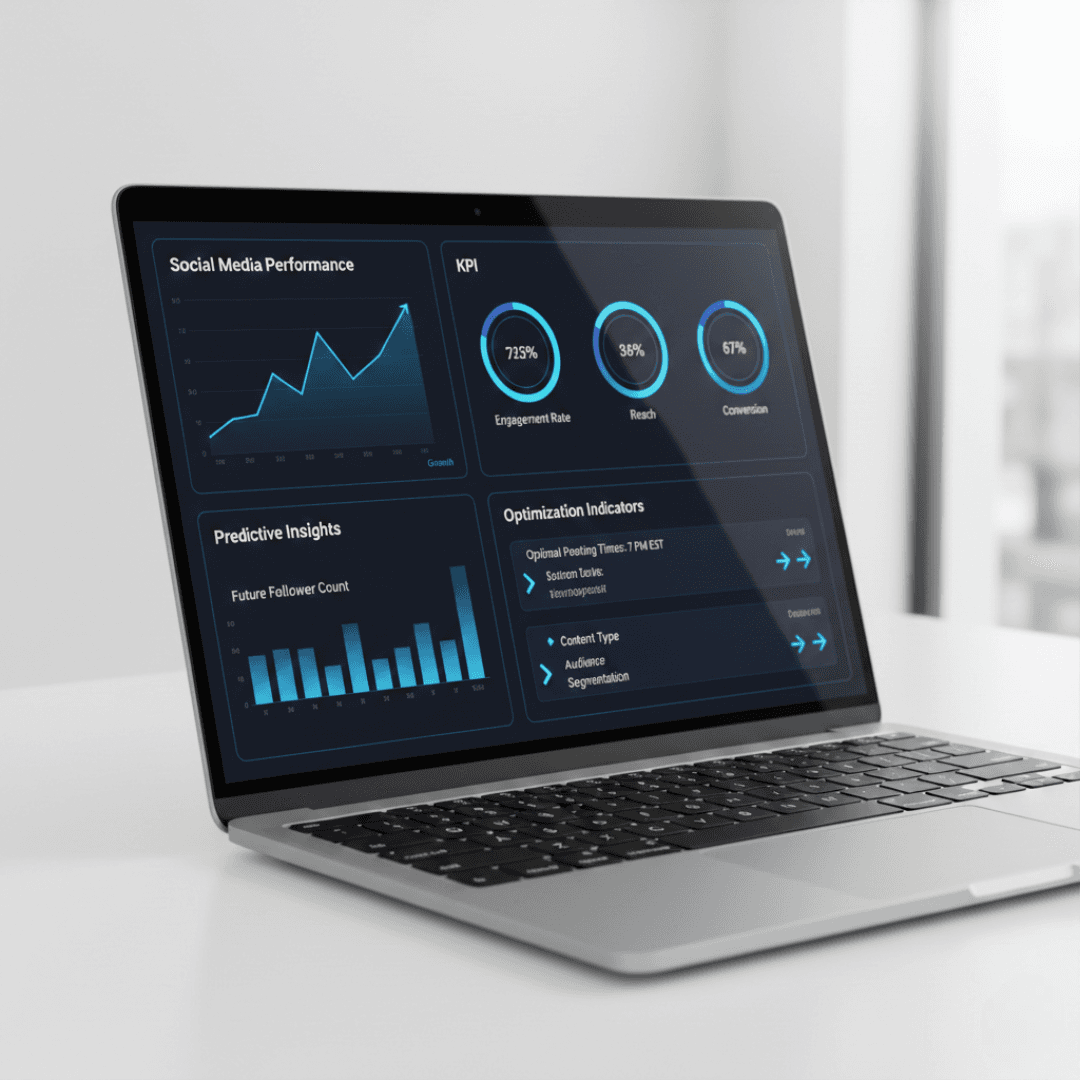
This is exactly where AI analytics and performance optimization reshape the discipline. The best AI tools for social media management no longer merely visualize numbers, they interpret them, contextualize them, and transform them into actionable insights. Powered by Machine Learning, deep learning, and AI-powered tools, analytics shifts from passive reporting to continuous learning. AI marks the transition from static dashboards to living systems that improve decisions over time.
Why Social Media Analytics Often Fail to Drive Real Improvement
Brands almost universally track basic social media metrics, but far fewer convert those metrics into meaningful learning. According to a 2024 HubSpot report, only 37% of marketers feel confident interpreting their social performance data. The rest collect numbers without knowing how those numbers should influence content strategy, marketing campaigns, or content creation decisions.
This breakdown happens for several reasons:
- Metrics lack context: A spike in reach means little if potential customers disengage afterward.
- Dashboards are descriptive, not diagnostic: Most marketing tools show what happened, not why.
- Data is siloed: Instagram, TikTok, LinkedIn, and X each operate as isolated ecosystems.
- Teams lack analytical capacity: Few brands or agencies have a dedicated analyst or project manager focused on insight extraction.
As a result, companies fall into the reporting trap, producing performance reports that summarize the past without shaping the future.
AI analytics addresses this by reframing analytics as a decision engine. The best AI marketing tools act as an intelligent AI assistant, guiding teams toward smarter next steps instead of static observations.
What Is AI Analytics in Social Media Management?
AI analytics refers to the use of artificial intelligence to process, interpret, and learn from social performance data at scale. Rather than manually reviewing spreadsheets, AI continuously analyzes cross-platform signals using Machine Learning, Natural Language Processing, and pattern recognition models.
AI examines how content topics, posting cadence, creative formats, tone, timing, and audience segments interact across platforms. It identifies correlations humans rarely detect, including:
- Which content creation formats drive sustained engagement
- Which themes trigger repeat interaction
- Where sentiment analysis reveals declining trust
- How audience response shifts based on user behavior
Unlike traditional social media tools, AI analytics connects signals across the entire content lifecycle, supporting smarter content generation, planning, and optimization.
Moving From Metrics to Meaningful Insight
The true value of analytics is not knowing what happened, it is knowing what to do next.
AI excels here by identifying structural patterns, such as:
- Which video content formats maintain attention
- When engagement decay signals content fatigue
- How narrative consistency influences retention
- Which brand mentions correlate with conversion intent
Instead of optimizing individual posts, AI helps teams optimize systems. This is critical for any content creator, brand, or agency seeking scalable performance rather than one-off wins.
By leveraging recommendation engines and predictive modeling, AI transforms raw data into forward-looking guidance.
Cross-Platform Intelligence: Seeing the Whole Ecosystem
Most brands operate across multiple social media platforms, each with unique algorithms, norms, and audience expectations. Analyzing performance in silos leads to fragmented strategy.
AI analytics unifies the ecosystem. It reveals:
- Themes that scale across platforms
- Formats that only perform on specific channels
- Timing patterns that improve organic reach
- Audience cohorts that migrate between platforms
This unified intelligence is foundational to enterprise social media management, whether teams use tools like Sprinklr Social, Hootsuite Amplify, or integrated platforms like Kwore.
Performance Optimization as a Continuous Loop
Performance optimization is not an event, it is a loop.
AI shortens the feedback cycle. Insights emerge continuously and flow back into:
- Content calendar planning
- Posting schedule optimization
- Content approval decisions
- Campaign refinement
Instead of waiting for monthly reviews, AI enables weekly, even daily improvement. This keeps brands aligned with fast-moving algorithms and shifting audience expectations.
Understanding Audience Behavior With AI
Audience behavior is complex and dynamic. AI identifies subtle shifts, such as:
- Declining attention windows
- Changes in sentiment polarity
- Oversaturation signals
- Interest migration toward trending topics
By monitoring social listening signals and engagement quality, AI ensures content aligns with real audience intent, not assumptions.
From Engagement to Impact: Measuring What Actually Matters
Not all engagement drives value. AI distinguishes vanity metrics from impact metrics by correlating engagement with outcomes like:
- Website traffic
- Conversion probability
- Retention curves
- Funnel progression
This elevates analytics from storytelling to economic contribution, turning marketing content into a measurable growth engine.
AI Analytics for Teams and Agencies
For agencies and growing teams, AI reduces operational friction by standardizing insight extraction across clients, platforms, and objectives.
This supports clearer communication, stronger trust, and more consistent results — especially when managing complex business processes and multi-brand strategies.
Predictive Insights: Looking Beyond the Past
AI’s predictive layer supports smarter experimentation by forecasting:
- Content saturation risk
- Performance decay windows
- Emerging opportunities
- Algorithm sensitivity shifts
While predictions are never perfect, they give teams strategic lead time, a decisive advantage in competitive environments.
How AI Analytics Connects Back Into Creation and Planning
Analytics only matters when it shapes action. The best AI marketing platforms ensure insights flow into:
- Social media content creation
- Creative direction
- Planning and scheduling
- Campaign design
This closes the loop. Social media becomes a learning system, not just a publishing channel.
How Kwore Approaches AI Analytics and Performance Optimization
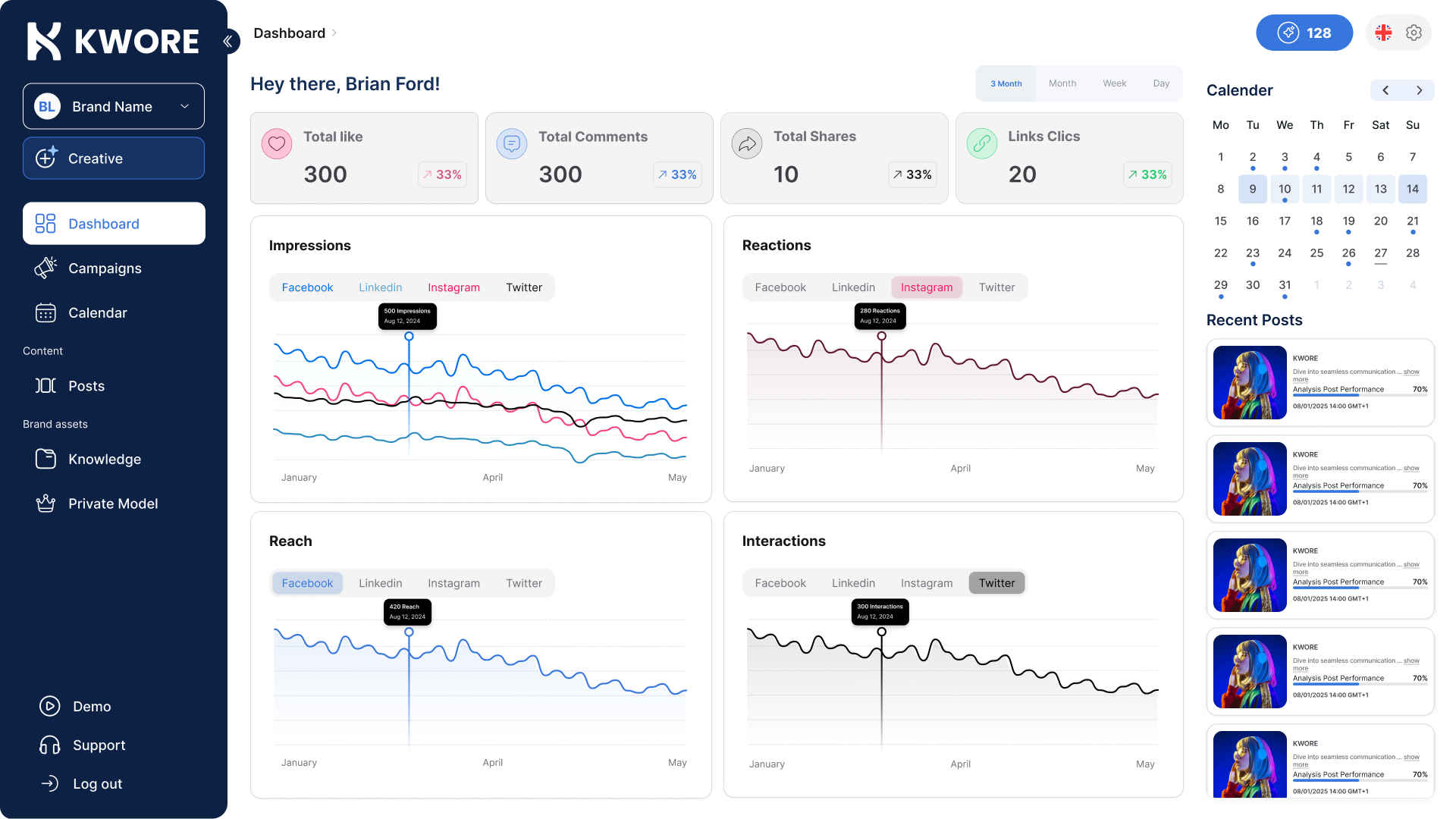
Kwore treats analytics as an intelligence layer embedded across the platform. Performance data informs content generation, planning, scheduling, and optimization in real time.
Instead of overwhelming dashboards, Kwore highlights what matters most, explains why it matters, and guides what should happen next. This philosophy defines what the best AI tools for social media management should deliver.
FAQs
Can AI really improve social media performance?
Yes. AI identifies hidden patterns and accelerates optimization cycles beyond human capability.
Is AI analytics only for large companies?
No. Smaller teams benefit even more because AI replaces manual analysis.
How often should performance be analyzed?
With AI, analysis is continuous rather than periodic.
Does AI replace human judgment?
No. AI supports strategy, humans remain in control.